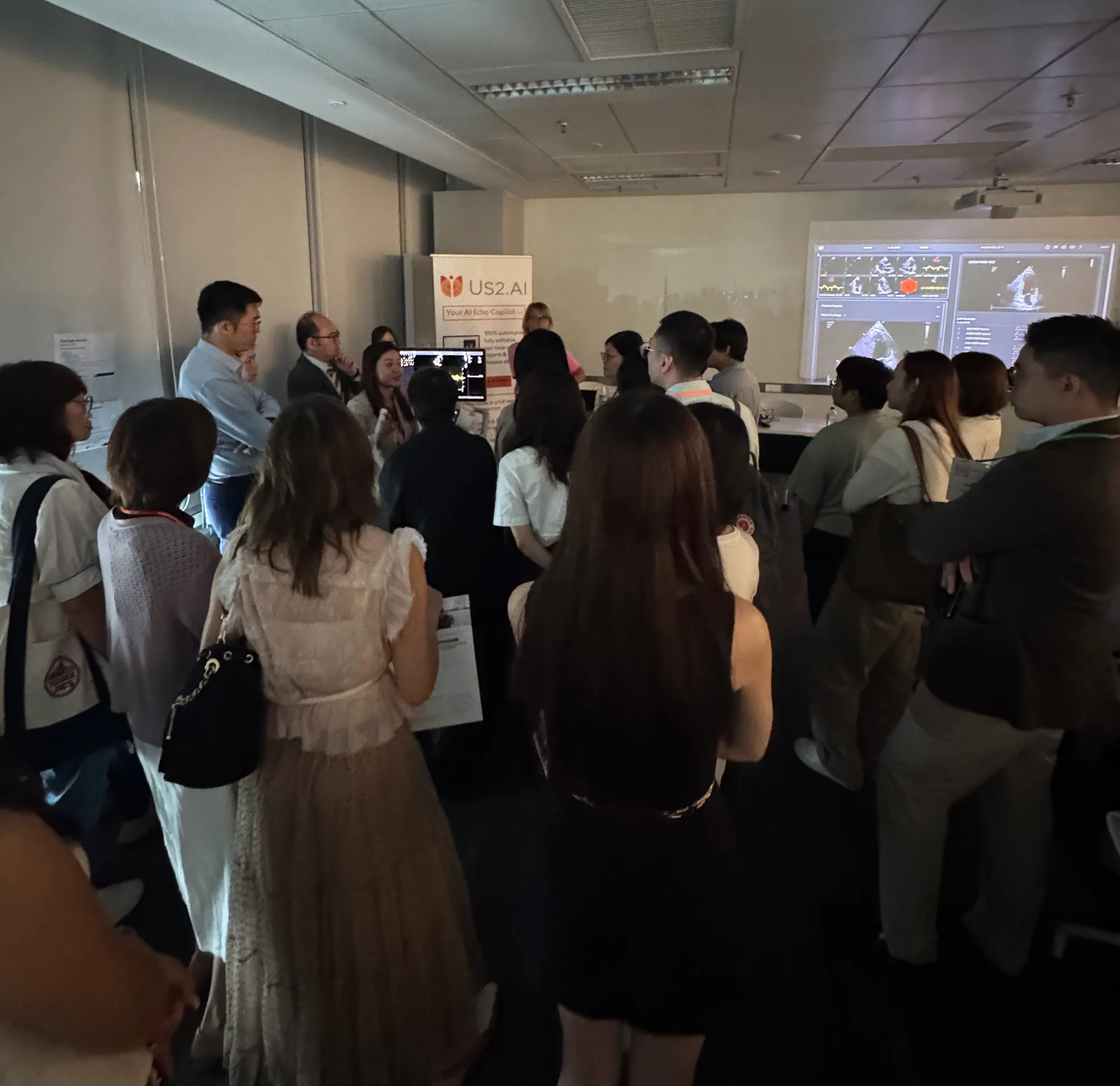
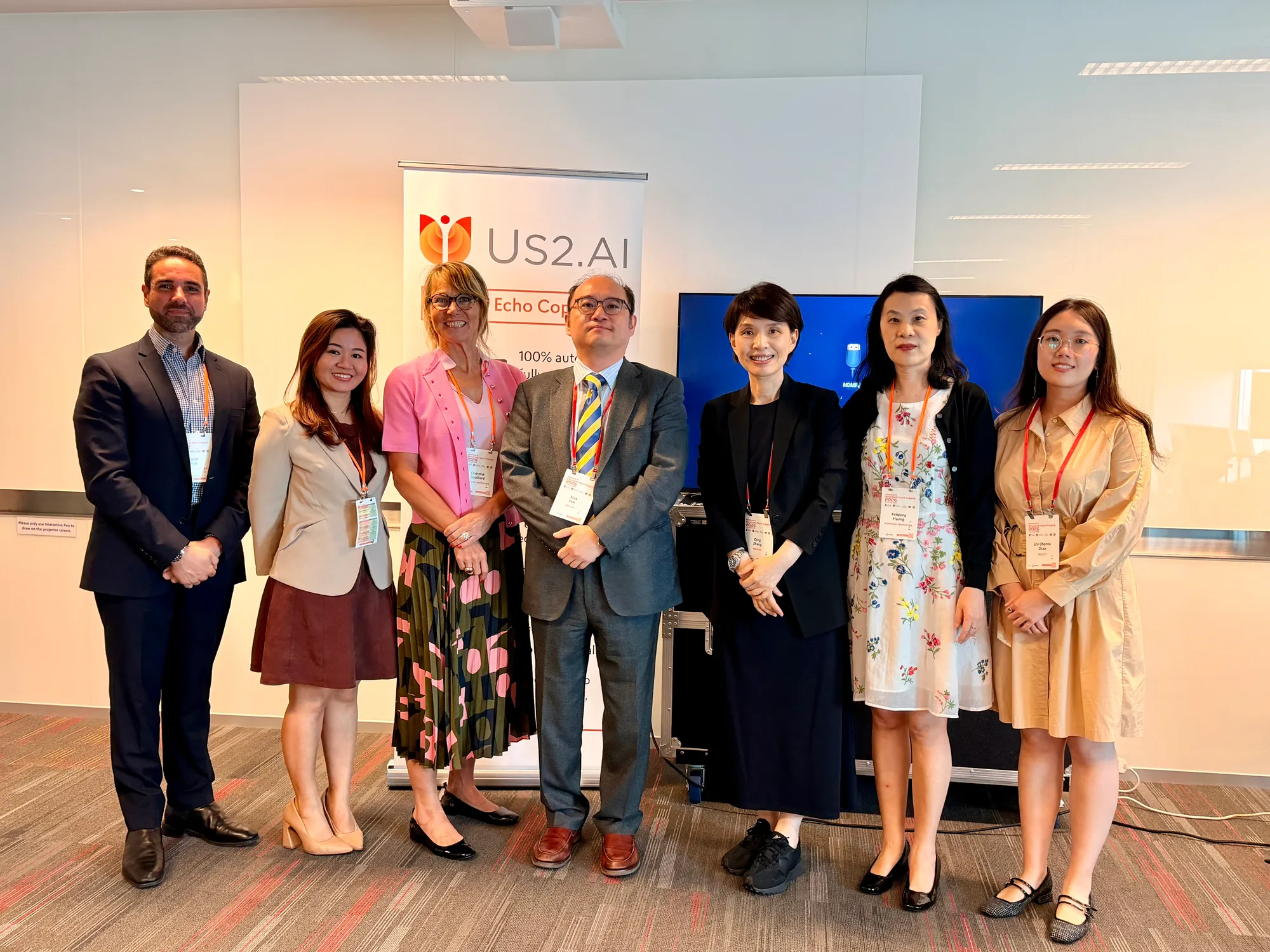
The Us2.ai team attended Advances in Structural Heart Imaging 2026 at CUHK Medical Centre in Hong Kong on 4 and 5 July, connecting with clinicians and researchers from across the Asia Pacific region.
Clinical evidence: a missed cardiac amyloidosis diagnosis caught by AI
A standout moment from the congress was a presentation by Prof. Alex Lee and Dr. Lily Zhao at the Chinese University of Hong Kong, sharing real-world clinical evidence for the use of Us2.ai in cardiac amyloidosis detection.
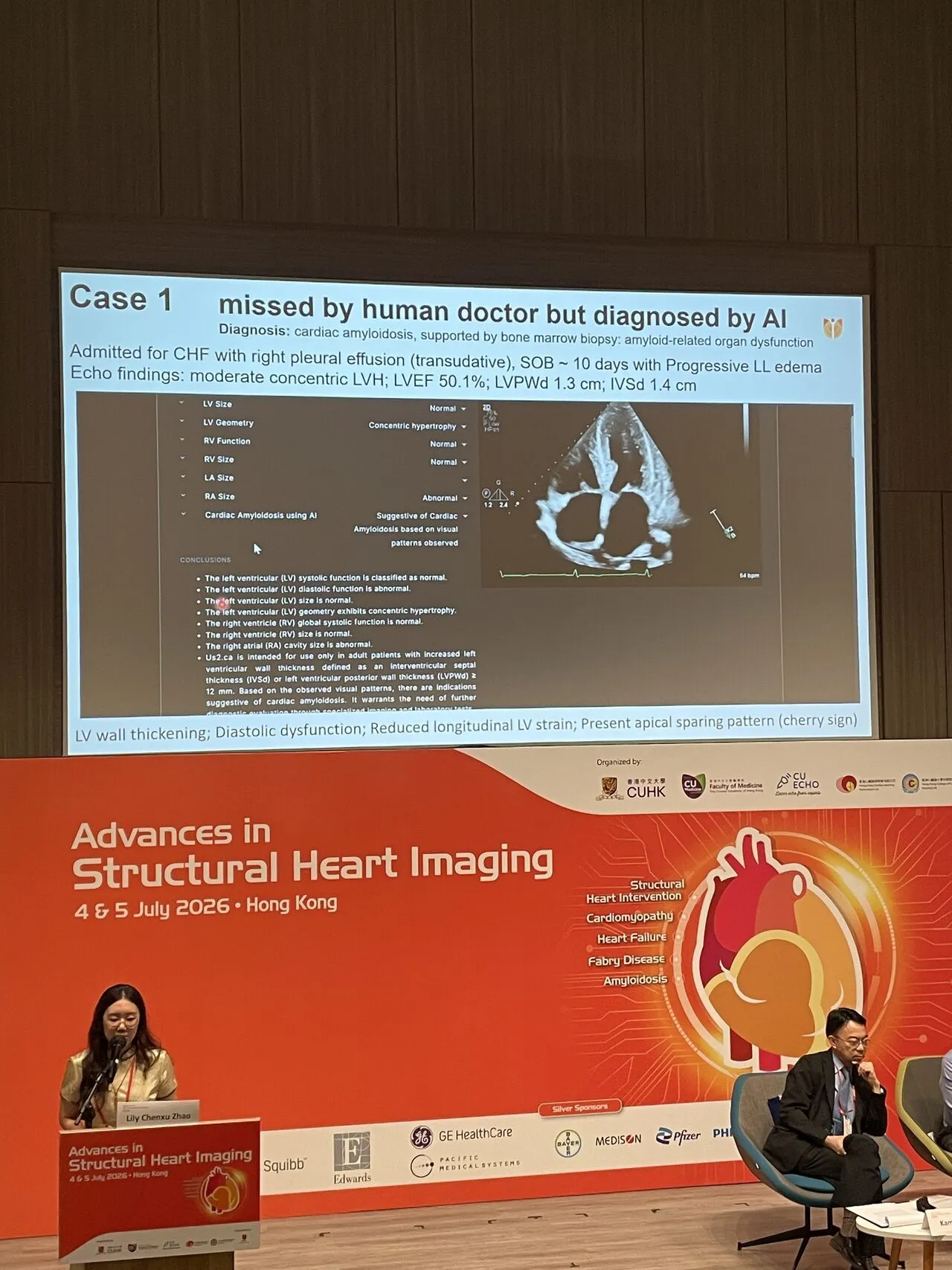
One case in particular illustrated the potential of AI-assisted echocardiography in a way that few statistics can. A patient had been admitted with congestive heart failure, right pleural effusion and progressive shortness of breath lasting approximately ten days. Standard echo findings showed moderate concentric left ventricular hypertrophy, an LVEF of 50.1%, LV wall thickening, diastolic dysfunction, reduced longitudinal LV strain and an apical sparing pattern consistent with the cherry sign — features that, taken together, are strongly suggestive of cardiac amyloidosis.
The diagnosis had been missed by the treating clinicians. Us2.ai's AI flagged it.
The case was subsequently confirmed as AL cardiac amyloidosis, supported by bone marrow biopsy demonstrating amyloid-related organ dysfunction.
This is precisely the clinical scenario Us2.ai was built for. Cardiac amyloidosis is one of the most frequently missed diagnoses in cardiology, not because the echo data is unavailable, but because the subtle pattern recognition required to identify it consistently is difficult to scale across busy echo labs. AI does not replace the clinician's judgement. But it ensures that the data already captured in the scan is never overlooked.
Workshop: Hands-on AI echo for cardiac amyloidosis
Us2.ai was honoured to be invited by Prof. Alex Lee and Prof. Qing Zhang to run a hands-on workshop at ASHI 2026, showcasing the utility of Us2.ai's AI echo solution for cardiac amyloidosis detection and management.
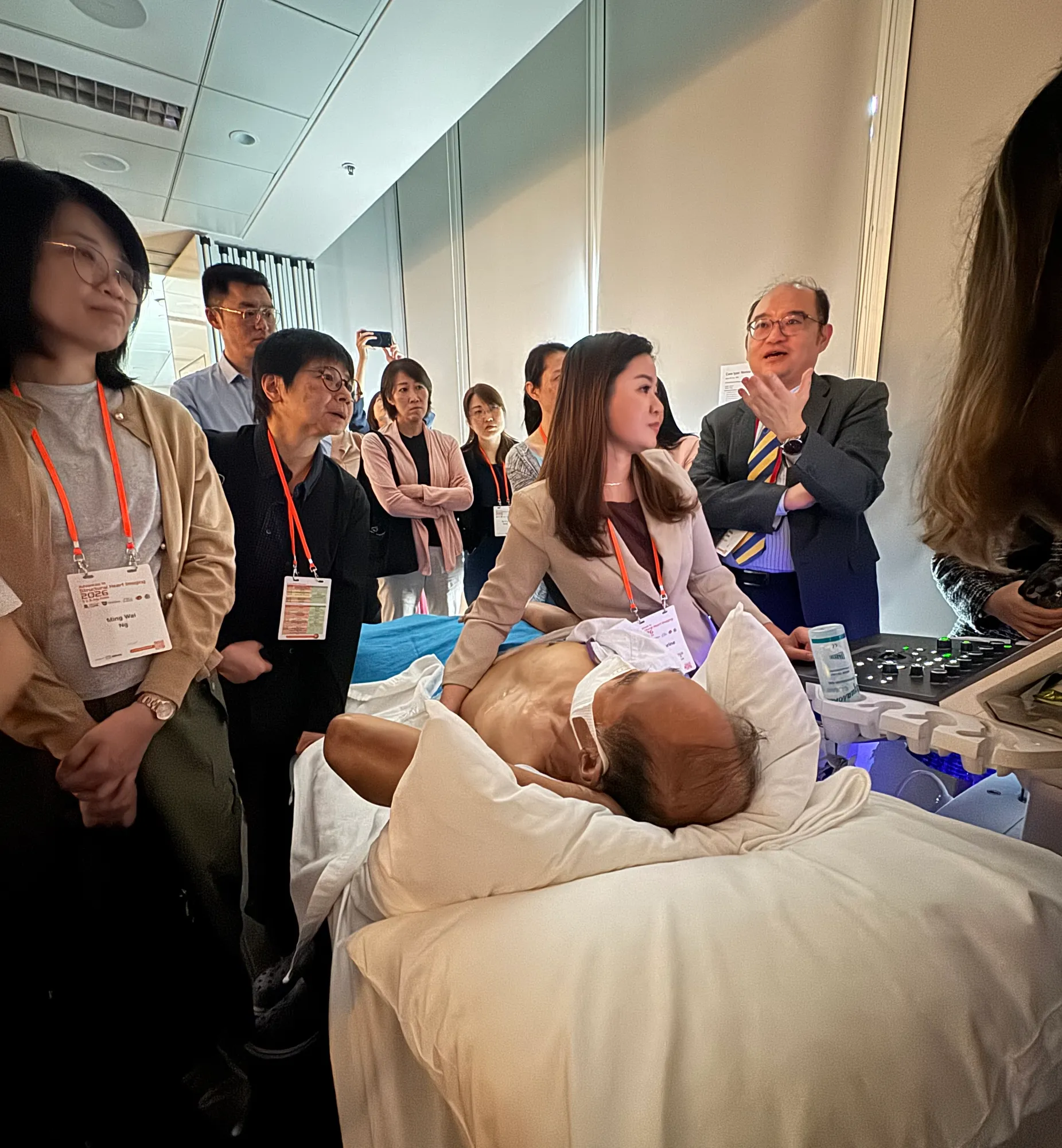
The 90-minute session, sponsored by Pfizer and Medison, moved from concept to practice. Attendees experienced an expert lecture covering AI echo fundamentals and guideline-based cardiac amyloidosis detection criteria, a live demonstration of Us2.ai generating real-time measurements and automated diagnostic reports, and a bilingual English and Mandarin hands-on station experience using confirmed CA and healthy patient profiles.
The room was full. The questions were probing. The curiosity from clinicians across the region was a clear signal of how much appetite there is for AI-powered echocardiography in the Asia Pacific cardiology community!