What new inflammation research reveals about the future of heart failure care
A landmark study presented at ESC Heart Failure 2026 is challenging one of the field's long-held assumptions, and pointing toward a future where heart failure care needs to be more precise, more personalised, and more proactive.
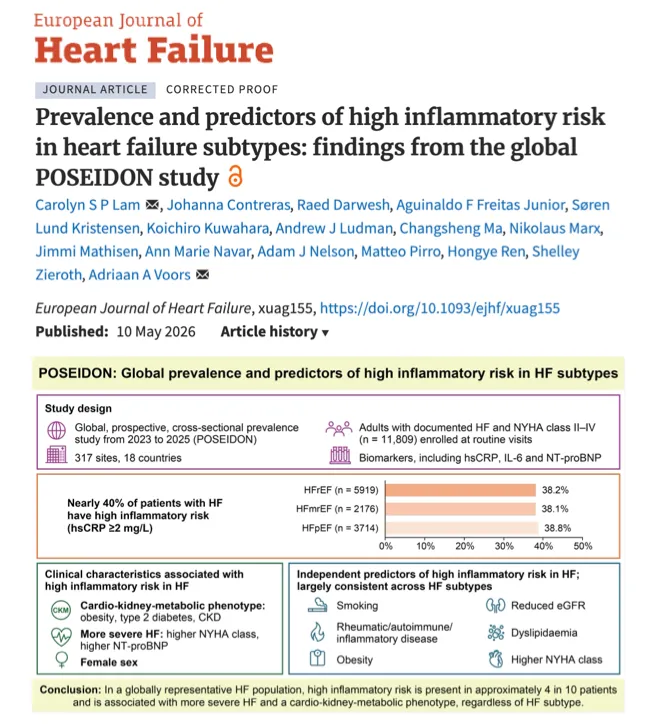
The POSEIDON study, led by Us2.ai co-founder and Non-executive Head of Medical Affairs Dr. Carolyn Lam, found that roughly 2 in 5 heart failure patients have high inflammatory risk, and that this prevalence is remarkably consistent across all three heart failure subtypes: HFpEF, HFmrEF, and HFrEF. Across 11,809 heart failure patients with available inflammatory markers, drawn from 317 centres in 18 countries, the inflammatory burden was nearly identical regardless of ejection fraction.
This challenges the traditional view that inflammation is primarily a HFpEF-driven phenomenon. If the signal is equally present across subtypes, the clinical and therapeutic implications are significant, and so is the question of how we identify, monitor, and act on it.
This is where AI has a critical role to play. Detecting subtle, longitudinal changes in cardiac structure and function, the kind that traditional workflows can miss, is central to what Us2.ai is built to do. As the field moves toward integrating imaging, biomarkers, and patient phenotyping into more actionable care decisions, tools that surface hidden signals earlier become not just useful, but essential.
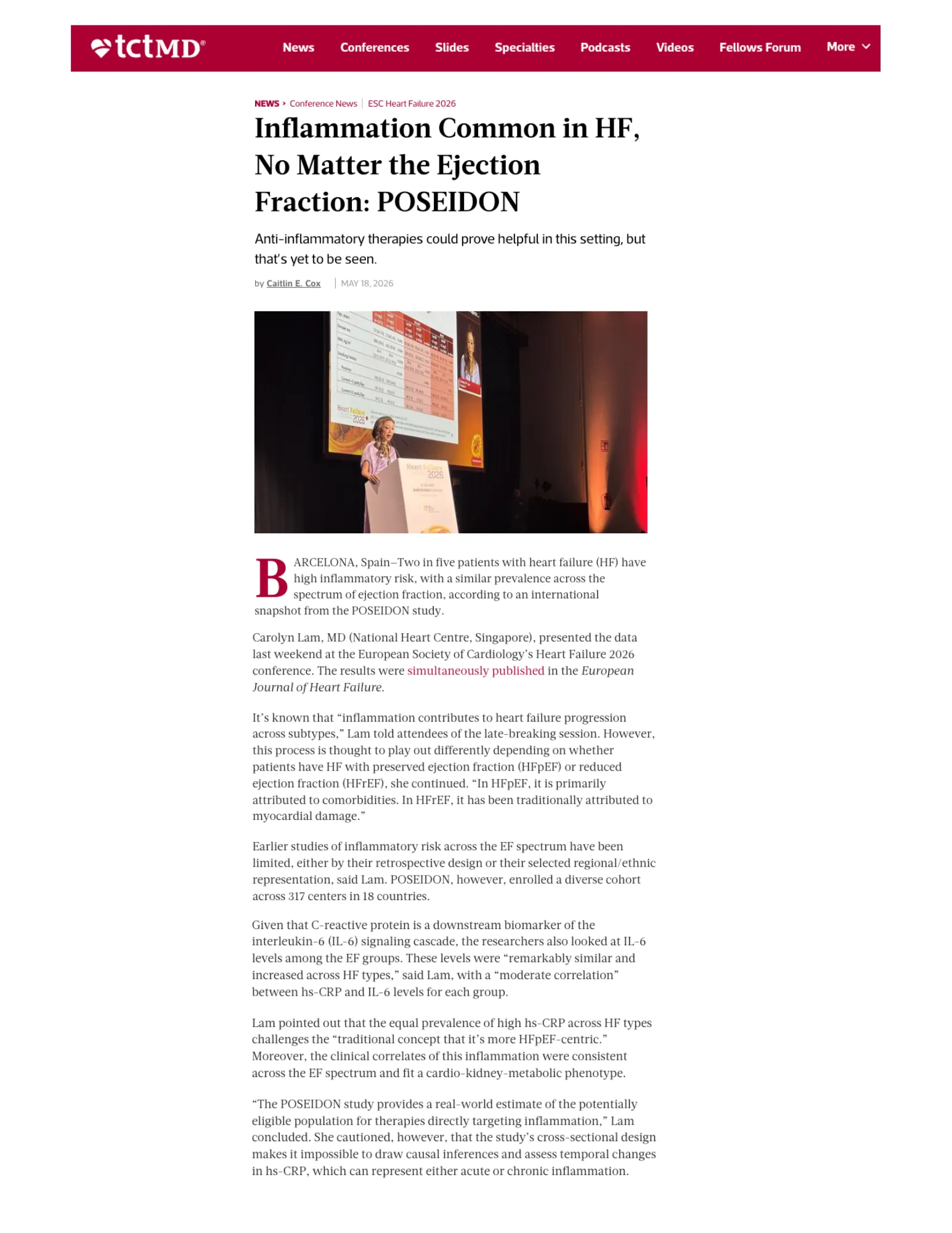
The findings were simultaneously published in the European Journal of Heart Failure and covered by TCTMD.