Article | Apr 24, 2024

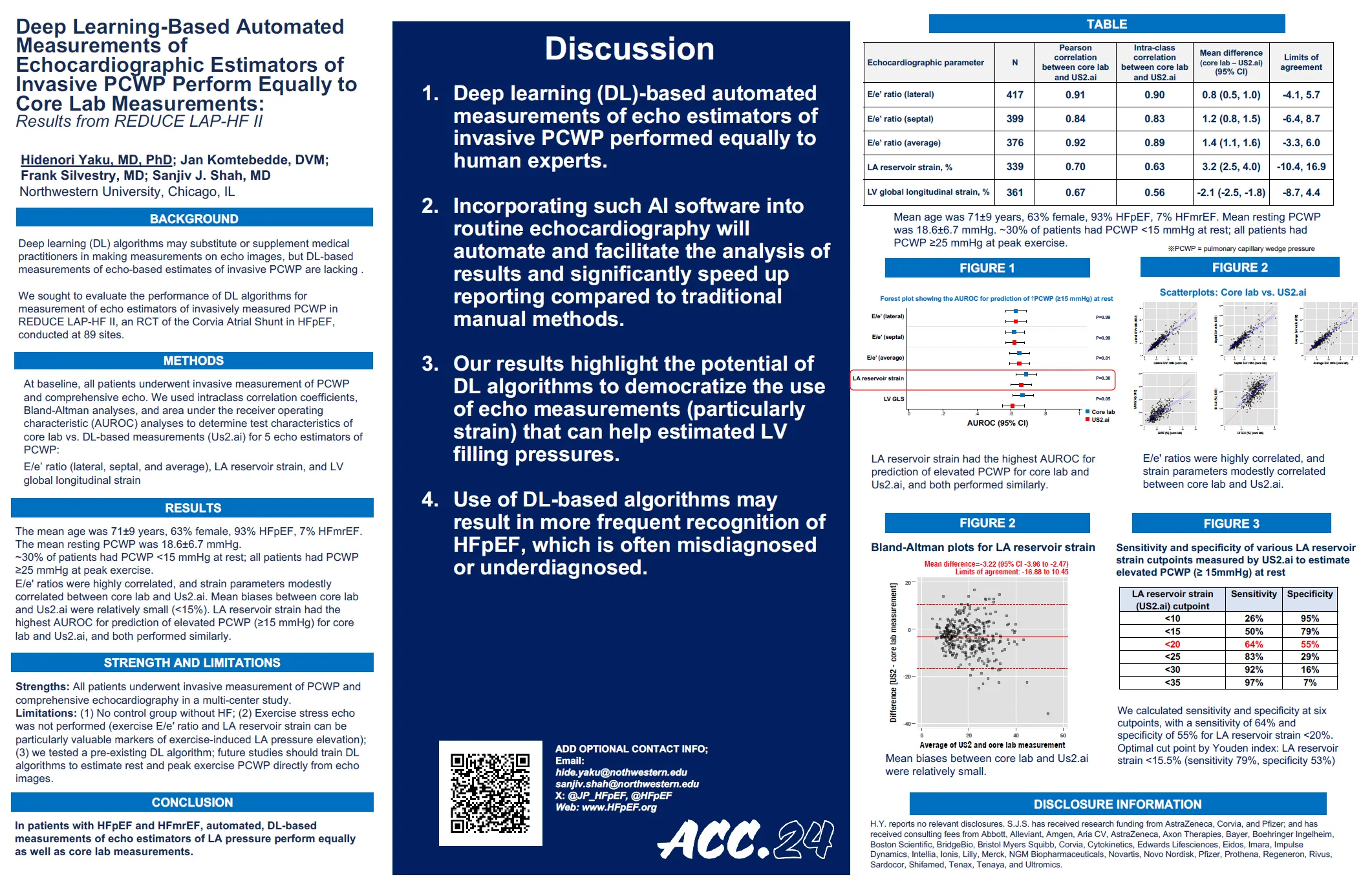
Evaluating the performance of automated deep learning algorithms for measurement of echo estimators of invasively measured PCWP.
Key Findings
- The study drew on the REDUCE LAP-HF II RCT, one of the largest HFpEF trials to date, involving 89 sites and 626 patients with HF and LVEF 40% or above, all of whom had simultaneous invasive PCWP measurement and comprehensive echocardiography read by expert core labs.
- E/e' ratios (lateral, septal, and average) were highly correlated between the Us2.ai deep learning measurements and core lab reads, while strain parameters showed modest correlation, with mean biases remaining less than 15% across all 5 echo estimators of PCWP.
- LA reservoir strain had the highest AUROC for predicting elevated PCWP (15 mmHg or above) for both the core lab and Us2.ai, and crucially both performed similarly, confirming the AI matches expert performance on the most clinically relevant threshold.
- In patients with HFpEF and HFmrEF (mean resting PCWP 18.6 +/- 6.7 mmHg, 63% female, mean age 71 years), automated deep learning measurements of LA pressure estimators were statistically equivalent to core lab readings, supporting their use in large-scale clinical trials and routine practice without requiring expert echocardiographic analysis.
- The ability to derive accurate PCWP estimates non-invasively and automatically from echo has direct clinical implications: it could accelerate diagnosis and earlier initiation of treatment in HFpEF patients where elevated filling pressures often go unrecognised.
Deep learning for HFpEF Detection
Yaku, H., Komtebedde, J., Silvestry, F. E., & Shah, S. J. (2024). Deep Learning-Based Automated Measurements of Echocardiographic Estimators of Invasive Pulmonary Capillary Wedge Pressure Perform Equally to Core Lab Measurements: Results from REDUCE LAP-HF II. Journal of the American College of Cardiology, 83(13), 316–316. https://doi.org/10.1016/s0735-1097(24)02306-4