Overview
Pulmonary hypertension carries a diagnostic delay of years due to its non-specific symptoms that overlap with common heart and lung diseases. Echocardiographic screening is operator-dependent, requires multiple views, and is reliant on an adequate tricuspid regurgitation jet. Right heart catheterisation, the gold standard for diagnosis, is invasive and not widely available in resource-limited settings. Existing AI approaches require multi-view ensembles, multimodal fusion, or sonographer-curated measurements, limiting deployment beyond specialist centres. The best published single-view echocardiographic AI system had reached an AUROC of 0.75. This late-breaking presentation described the development and multinational external validation of a new approach that substantially exceeded that benchmark.
Study Design
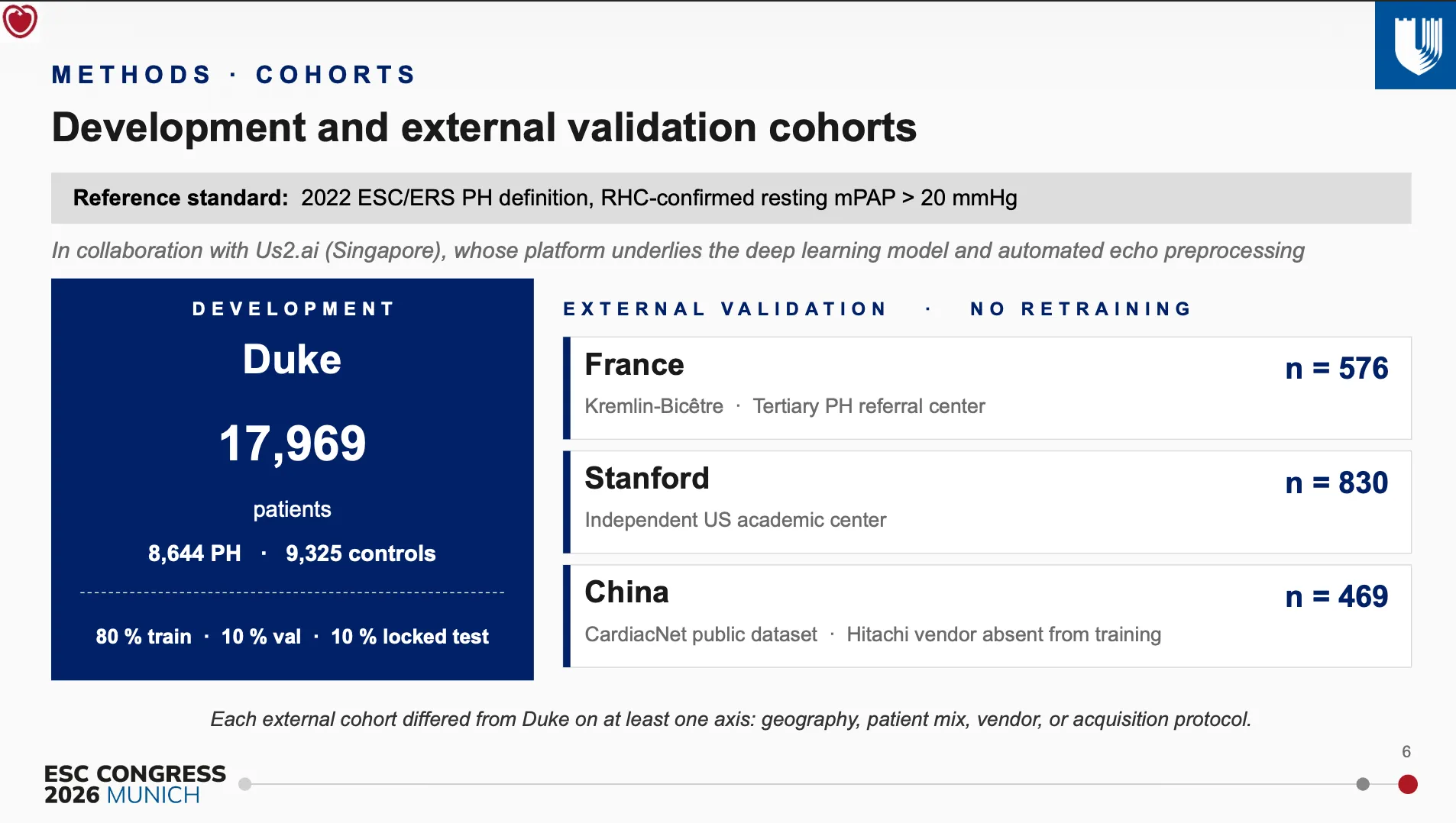
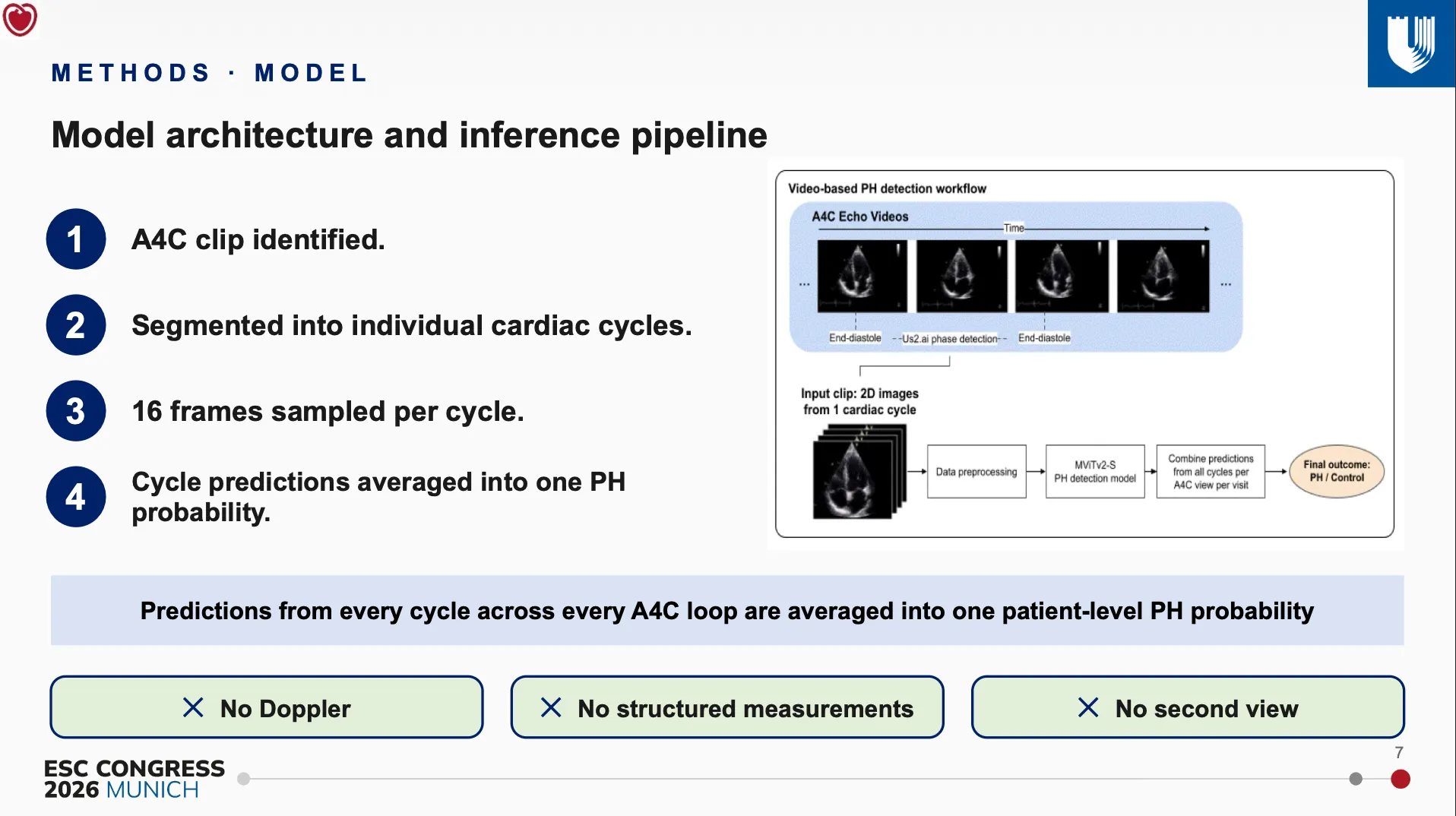
A Multiscale Vision Transformer v2-small model was trained on cardiac-cycle-level apical four-chamber clips from 17,969 patients in the Duke Echo Lab Database, the largest RHC-confirmed cohort assembled for AI-based PH detection, including 8,644 RHC-confirmed PH cases and 9,325 controls. The 2022 ESC/ERS reference standard of resting mean pulmonary artery pressure above 20 mmHg was used. The model requires no Doppler, structured measurements, or multi-view input. An automated echocardiographic platform handled view classification, quality control, and cardiac-cycle segmentation. A 0.5 operating threshold was prespecified on internal validation and frozen before external validation. Three independent external cohorts were used spanning France, the United States, and China.
Key Results
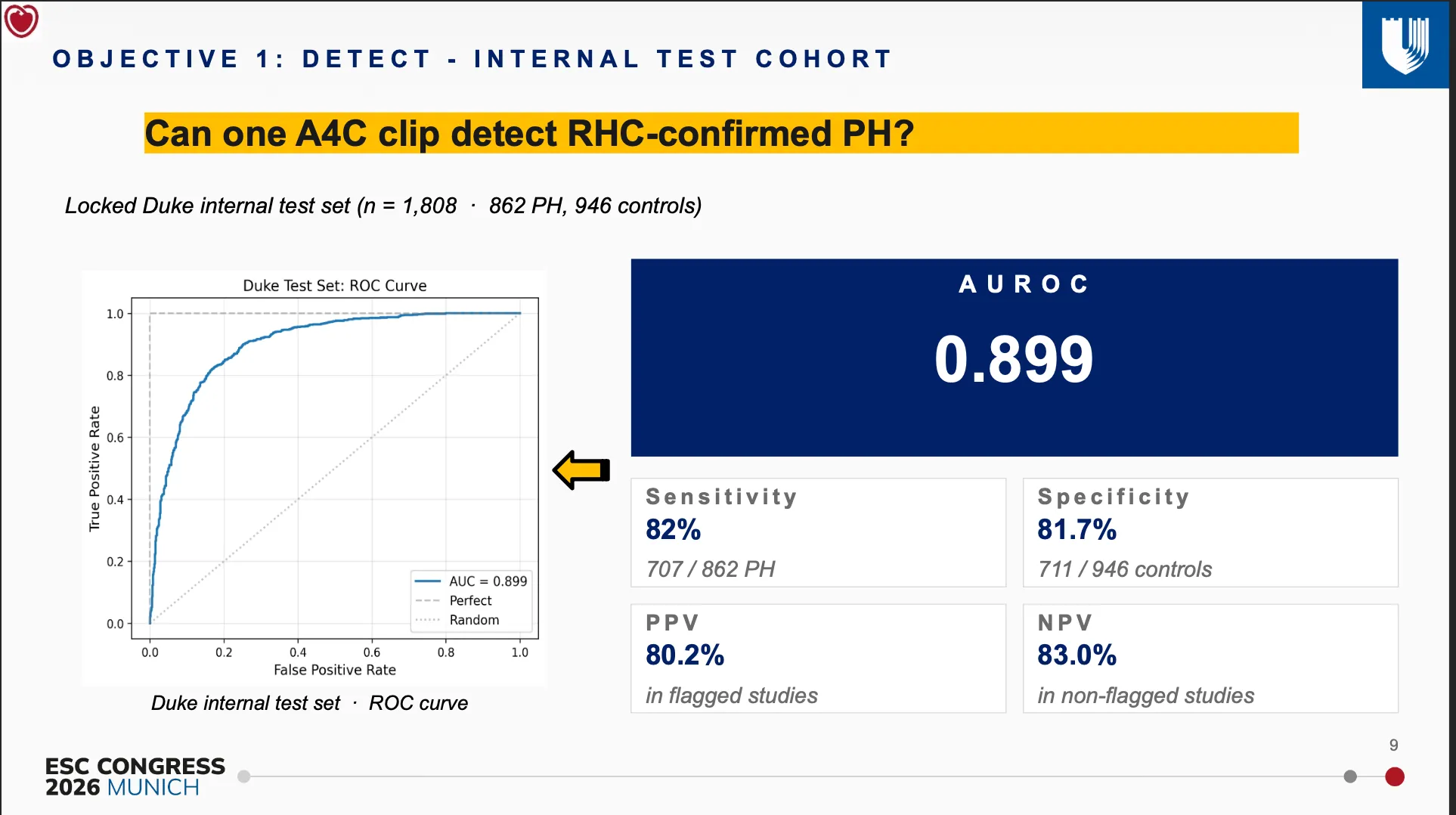
Internal Test Set:
- AUROC 0.899, sensitivity 82.0%, specificity 81.7%, NPV 83.0
External Validation:
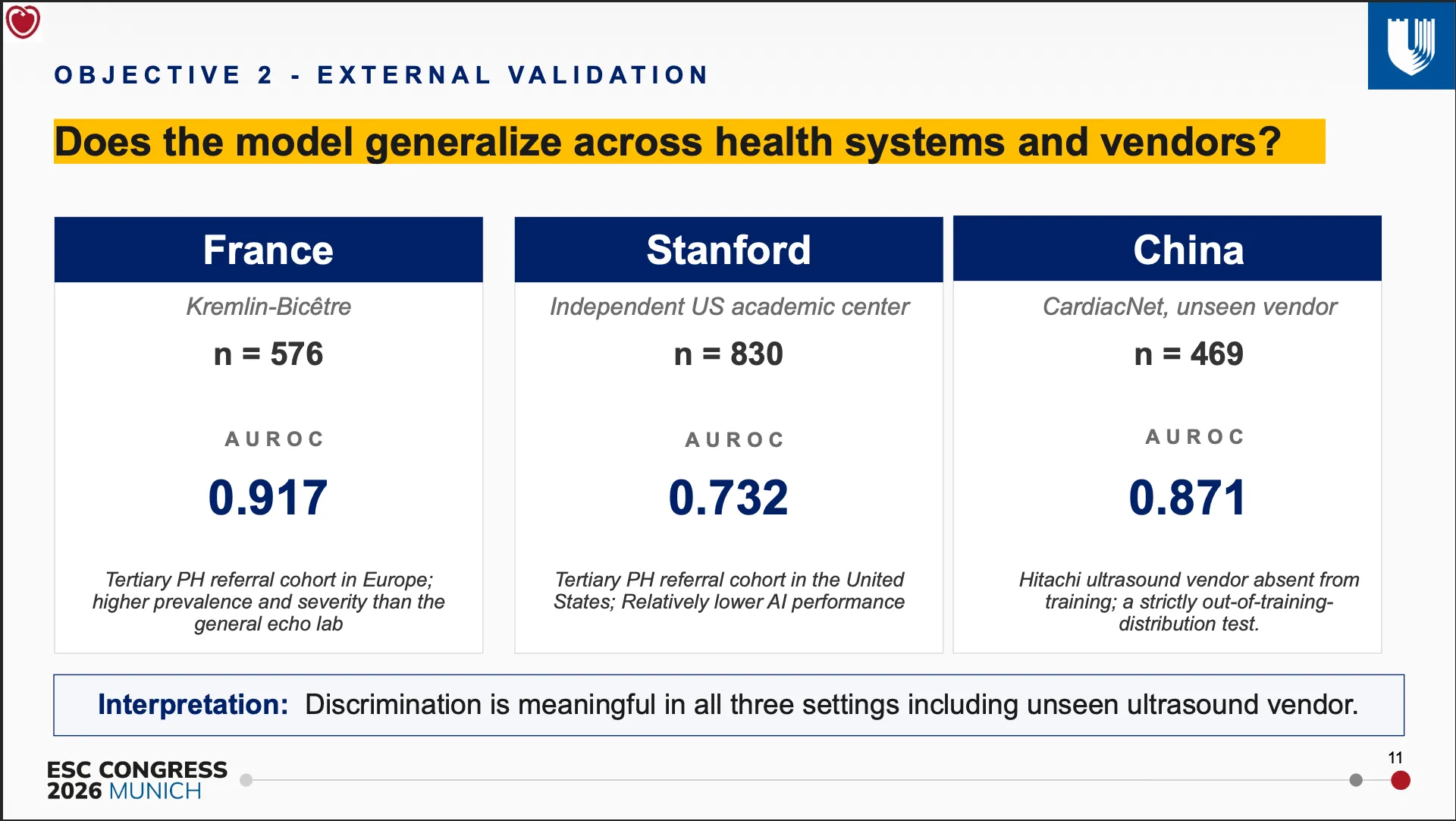
- AUROC 0.917 at Bicetre Hospital, France
- AUROC 0.732 at Stanford, USA
- AUROC 0.871 on CardiacNet-PAH Chinese cohort despite geography, vendor, and preprocessing differences
Performance by Severity:
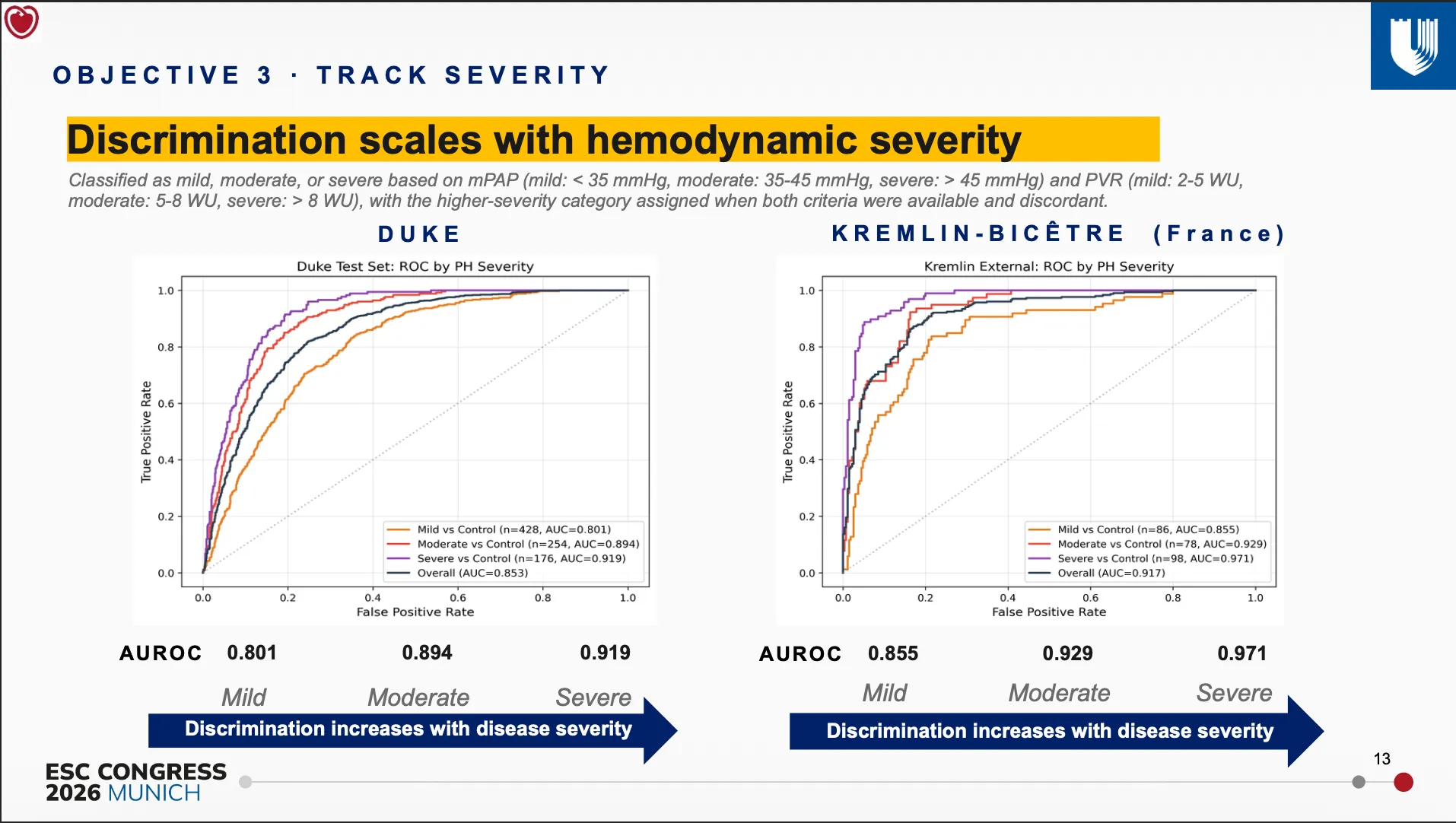
- Performance scaled monotonically with hemodynamic burden: AUROC 0.801/0.894/0.919 for mild/moderate/severe PH at Duke and 0.855/0.929/0.971 at Kremlin Bicetre
Performance by PH Subtype:
Why This Matters
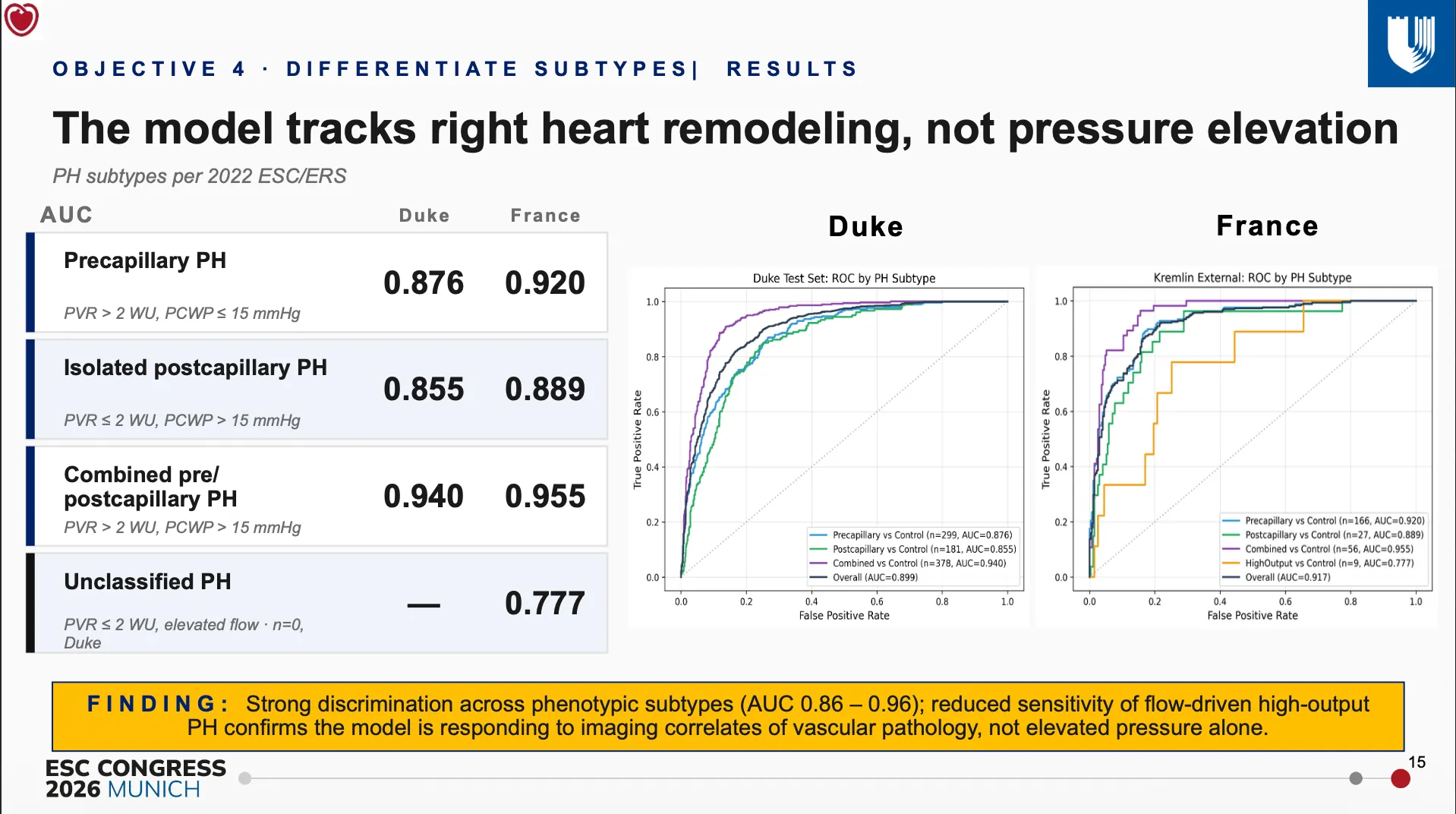
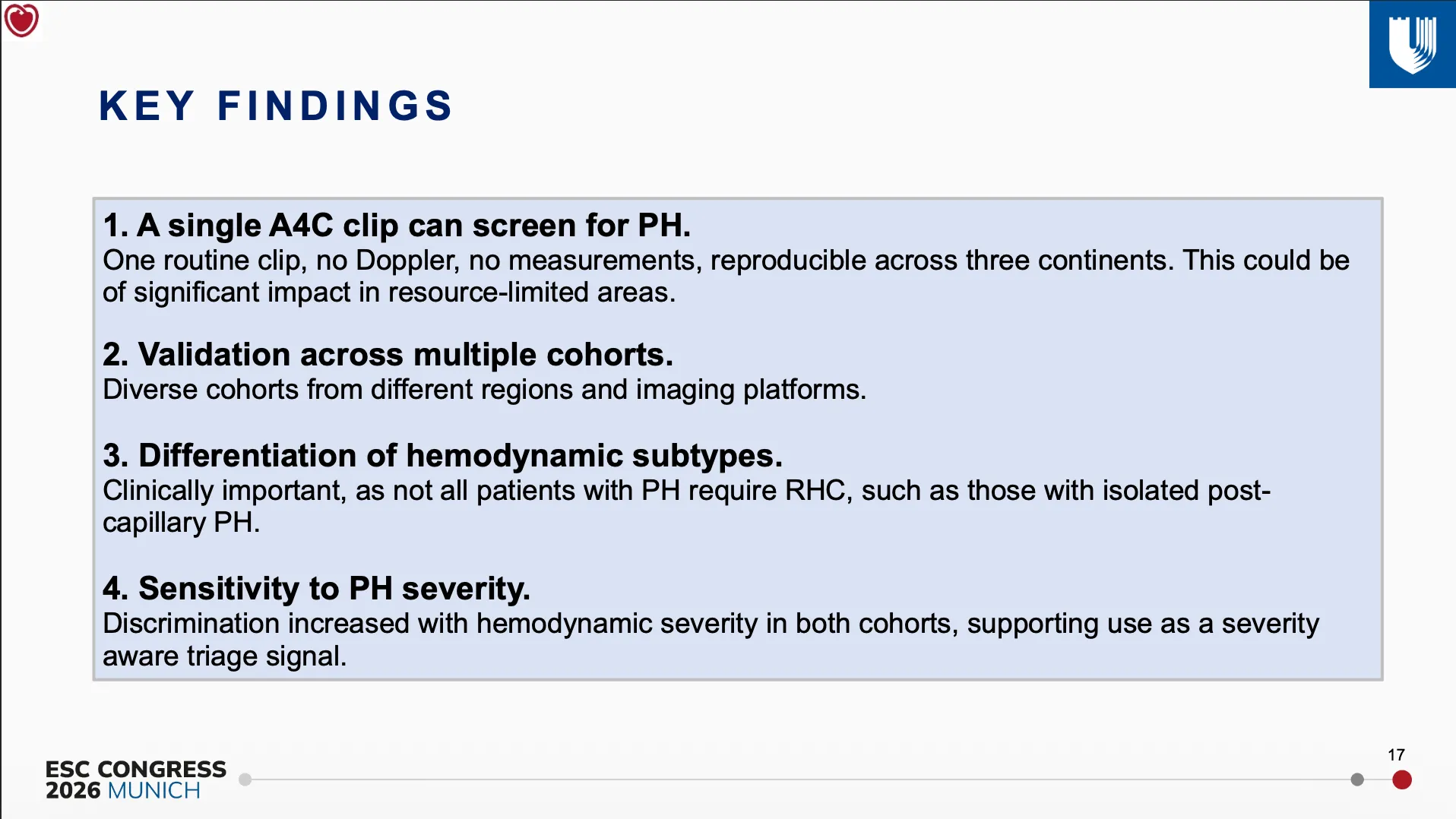
Pulmonary hypertension is frequently diagnosed late, when irreversible vascular remodelling has already occurred. A tool that can screen for PH from a single standard echocardiographic clip, without requiring Doppler or specialist acquisition, has significant implications for point-of-care deployment and non-specialist triage. The model's performance scaling with hemodynamic severity and its tracking of vascular rather than pressure-driven phenotypes supports biological plausibility and clinical relevance. The multinational validation across geographically, vendor-, and acquisition-distinct cohorts demonstrates robustness for real-world deployment.
Conclusion
A single apical four-chamber clip processed by a spatiotemporal transformer trained on the largest RHC-confirmed cohort to date accurately detects pulmonary hypertension and generalises across three geographically distinct external cohorts, substantially exceeding the prior single-view echocardiographic benchmark and supporting deployment for point-of-care and non-specialist triage.

Alenezi, F. (2026, August 28-31). Automated detection of pulmonary hypertension from a single apical four-chamber echocardiographic clip: Development on the largest RHC-confirmed cohort to date and multinational external validation [Late-breaking presentation]. ESC Congress 2026, Munich, Germany.