Article | Nov 27, 2024
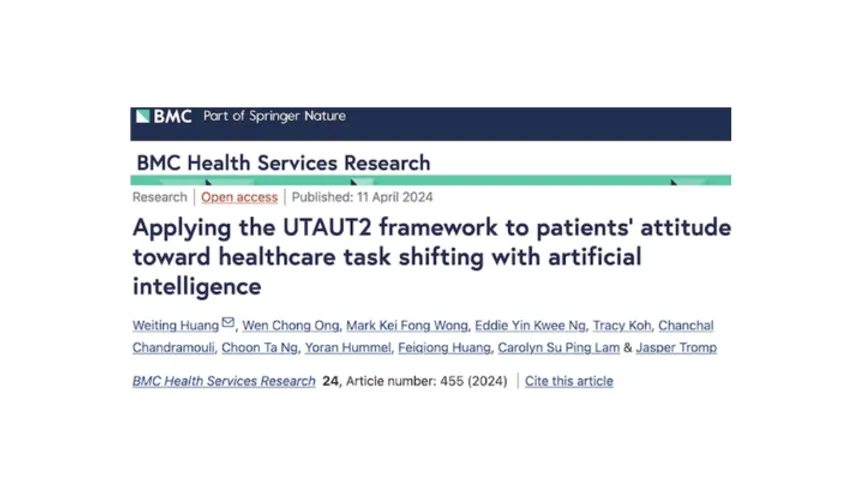


Healthcare AI technologies have seen tremendous adoption in the medical imaging field. AI-echo's performance has been shown to match or exceed human experts in many studies, but do we know if patients are ready to accept AI technology?
In 100 patients with suspected heart failure who presented for cardiac imaging at National Heart Centre Singapore, the authors examined patients' acceptance toward task shifting from conventional echo to AI-echo (with the aid of Us2.ai software).
Key Findings
- In a survey of 100 patients with suspected heart failure at National Heart Centre Singapore, the majority expressed willingness to accept AI-assisted echocardiography, indicating broad patient openness to AI in cardiac care.
- Trust in AI was higher when patients were informed that a qualified clinician would review and remain responsible for the final report, highlighting the importance of transparent human oversight in AI deployment.
- Acceptance was positively associated with higher health literacy and prior technology experience, suggesting targeted patient education could improve uptake.
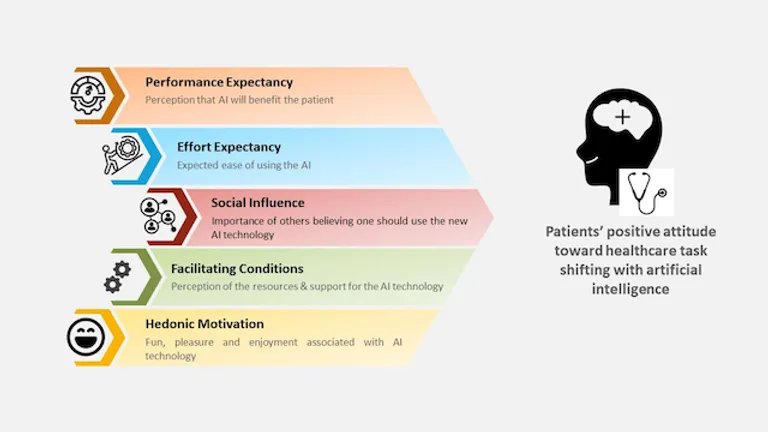
- The study used the UTAUT2 framework to identify transparency, accuracy, and speed as the top factors driving patient acceptance of AI-based diagnostic tools.
Some of the most important factors identified for patients' acceptance of AI technology are:
Access the full publication here →
Huang, W., Wen Chong Ong, Kei, M., Yin, E., Koh, T., Chandramouli, C., Choon Ta Ng, Hummel, Y., Huang, F., Su, C., & Tromp, J. (2024). Applying the UTAUT2 framework to patients' attitudes toward healthcare task shifting with artificial intelligence. BMC Health Services Research, 24(1). https://doi.org/10.1186/s12913-024-10861-z